Written vs. Spoken English
The rules for spoken and written communication are different
Written and spoken English are usually different. Spoken English is often less formal than written English. Spoken English is also less likely to follow correct grammatical rules. In a business environment, written communication should be formal and correct.
If your written communication is as informal and as grammatically incorrect as your spoken English, people may tend to judge you as being less intelligent than you really are. If you compose a letter or memo that is full of obvious errors, your reputation may suffer.
Things to Avoid in Written English
There are some major differences between accepted spoken English and accepted written English, especially in the business setting. Some of the things you want to avoid in writing are:
Colloquialisms
Colloquialisms are informal words or phrases that we often use when speaking but are not always appropriate in business communication. Colloquialisms may be acceptable in personal letters and e-mails, but they should not be used in business communication such as letters, memos, and reports.
Some Examples
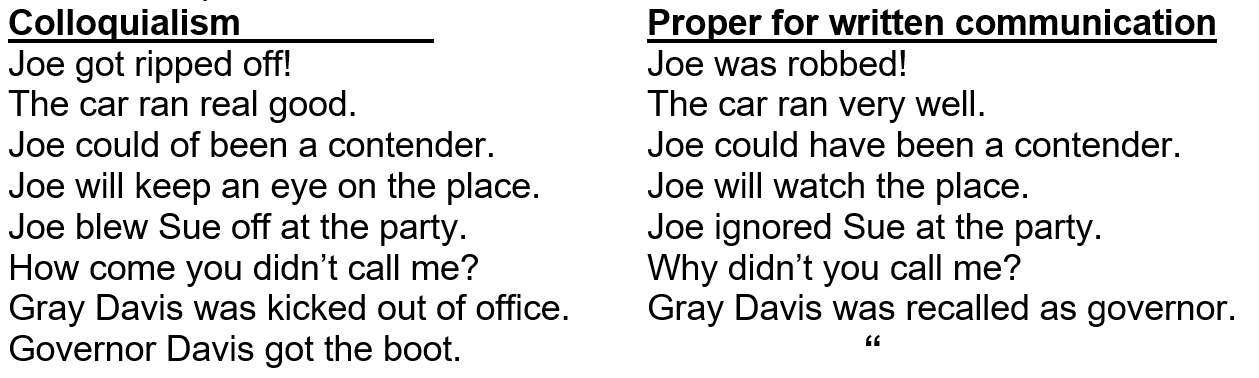
Colloquialisms can often lead to misunderstandings, especially when read by someone who is not familiar with common slang and colloquial terms. When writing, always try to write so that you can be understood by someone for whom English is not a primary language. Doing so will help you avoid colloquialisms that may be misinterpreted if they are taken literally.
Abbreviated Words
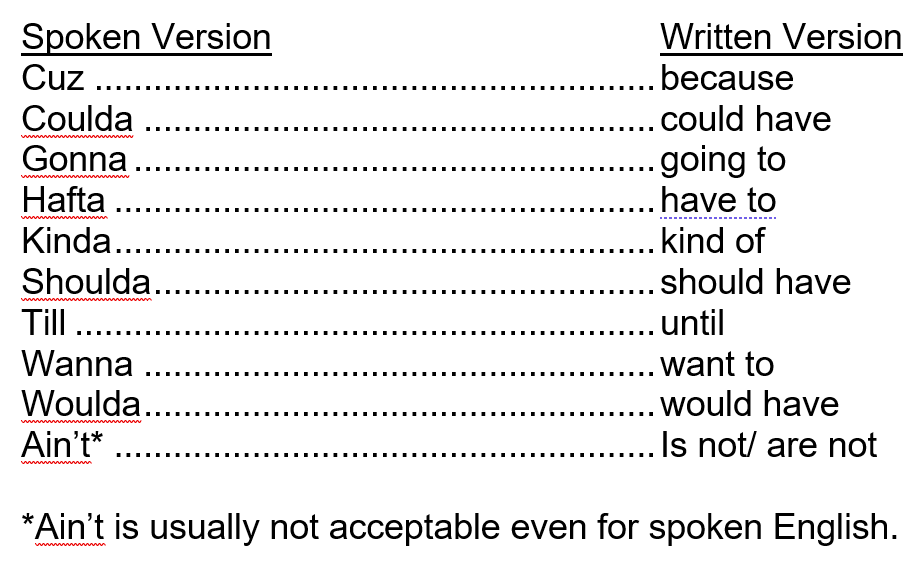
When we speak, we often abbreviate words. These abbreviated words often do not even exist in written English. Proper business communications should not include abbreviated words like those shown below. Thankfully, most spell checkers in word processors will mark abbreviated words as misspelled.
Passive Voice
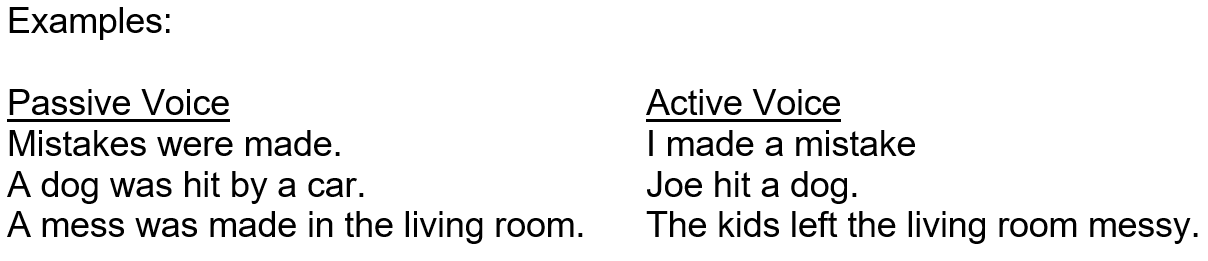
Passive voice obscures the subject of the sentence. People may use passive voice deliberately in an attempt to shift blame, for example, or it may simply be their normal style of writing.
While passive voice is appropriate in some business settings, it is almost always better to communicate in active voice. Passive voice often results in sentences that are much wordier than those using active voice. When you use passive voice, you are more likely to be misunderstood.
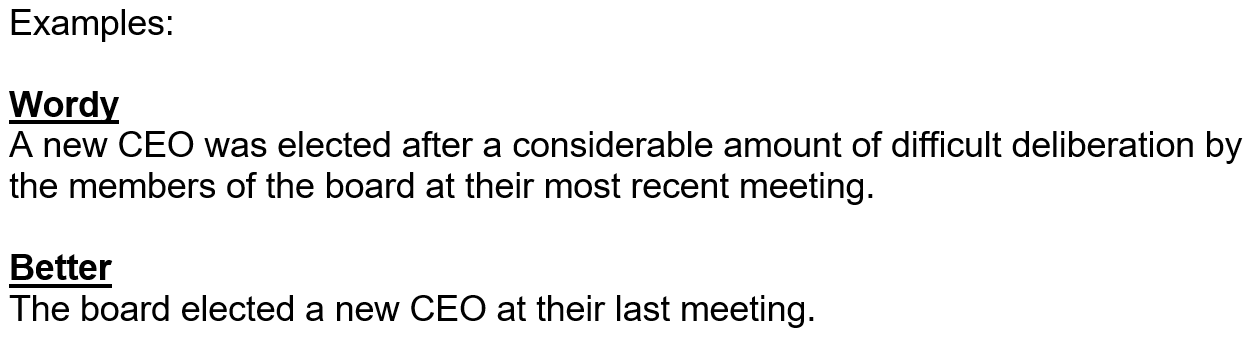
Wordiness
Some people think using more words in their writing makes them appear more intelligent. The result is often just the opposite. Wordiness can often bore your readers.
In your writing, strive to be precise and to get directly to the point. Say enough to be understood clearly and no more.